Listen
Monsters of the Midway
Chicago Bears · 6:54
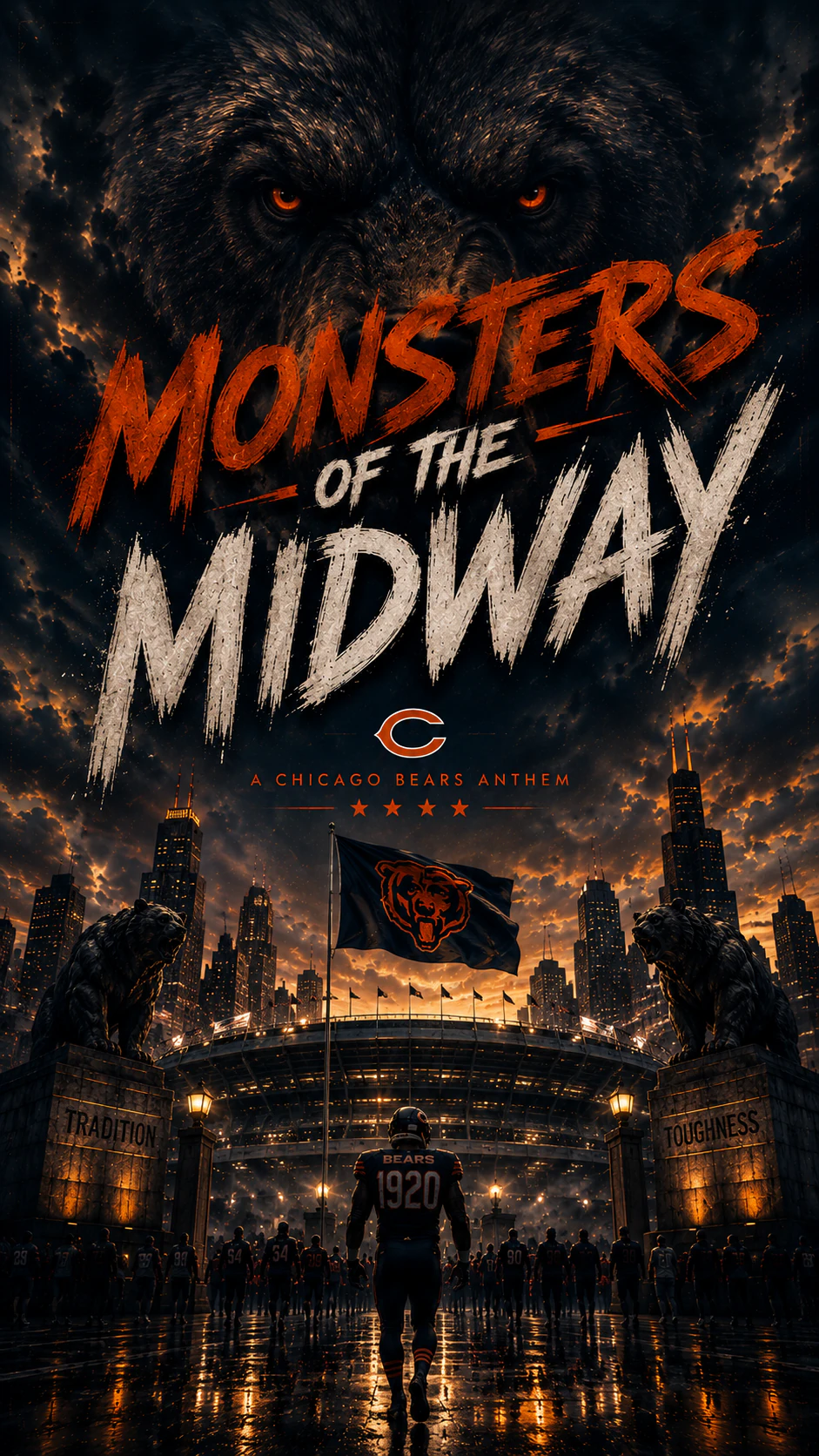
Chicago Bears
Chicago didn’t just build a football team. It built monsters.
Listen
Chicago Bears · 6:54
01 · Narrative orientation
Born from the earliest days of professional football and forged through generations of defense, toughness and frozen Sundays, the Chicago Bears carry one of the NFL’s deepest mythologies. Monsters of the Midway travels from George Halas to Sweetness, the legendary 1985 defense and beyond—telling the story of a city and a team that learned to bear down together.
Before the Super Bowl. Before television transformed football into America’s biggest sporting spectacle. Before much of the NFL as we know it existed—there was George Halas.
The franchise that became the Chicago Bears began as the Decatur Staleys in 1920 before moving to Chicago. Halas would become one of professional football’s foundational figures, helping shape not only the Bears but the league itself.
The mythology grew. Red Grange brought star power. Sid Luckman helped revolutionize the passing game.
Then came generations of players who seemed perfectly designed for Chicago. Dick Butkus played linebacker with a ferocity that became synonymous with the position. Gale Sayers—the Kansas Comet—turned running into art.
And then came Walter Payton. Sweetness. Number 34 ran with extraordinary power and grace, becoming not merely one of football’s greatest running backs but one of the defining figures in Chicago sports.
Then 1985 happened. Mike Ditka on the sideline. Buddy Ryan’s defense. Mike Singletary in the middle. Richard Dent. Dan Hampton. Steve McMichael. Otis Wilson. Wilber Marshall. Jim McMahon brought swagger. William ‘The Refrigerator’ Perry became a phenomenon.
And a football team became a cultural event. They recorded the Super Bowl Shuffle before they had even won the championship. Then they went out and finished the job. The Bears went 15–1 during the regular season and demolished New England 46–10 in Super Bowl XX. The Monsters had returned.
Later generations carried pieces of that identity forward. Brian Urlacher. Lance Briggs. Charles Tillman. Devin Hester electrifying the return game.
There were also years that tested the loyalty. Quarterbacks came and went. Seasons ended too early. And one infamous playoff kick struck an upright, then the crossbar, before falling away. Chicago remembers that one too.
Because Bears fandom isn’t built only from championships. It’s inherited through winters, neighborhoods, family rooms, sports bars and generations wearing blue and orange.
Chicago argues about almost everything. But on Sunday, the question remains remarkably simple: What do we do? Bear down.
Recognition becomes understanding.
Understanding becomes emotion.
02 · The anthem
Chicago blues, stadium hip-hop, marching percussion and enormous gang vocals carry the city’s mythology.
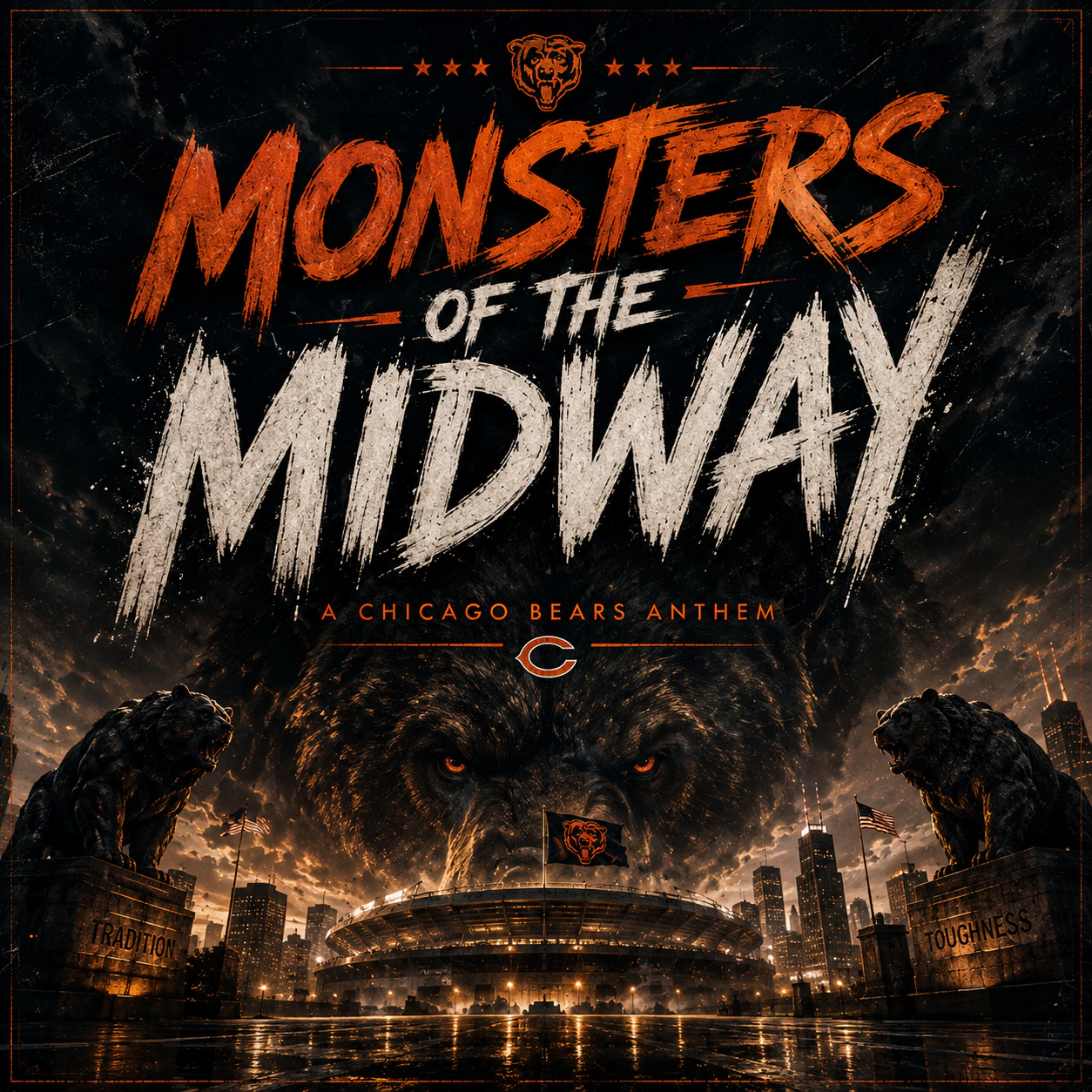
Monsters of the Midway should sound like Chicago became a football team: industrial, soulful, cold, funny, bruising and proud.
The record begins with wind coming off Lake Michigan, a distant train and the rumble of a stadium awakening. Then comes the drum. MONSTERS.
The musical foundation combines gritty Chicago blues with stadium hip-hop, marching percussion, distorted guitar, low brass and enormous gang vocals.
Each historical era receives its own character. The early Bears feel weathered and foundational. Butkus and Sayers bring violence and movement. Then the arrangement opens emotionally for Walter Payton—piano, Hammond organ, soul and gospel harmony giving Sweetness the warmth his section deserves.
And then: Nineteen. Eighty. Five. The song becomes a defensive war march. Marching snares accelerate. Names become chants. The legendary 46 defense becomes a rhythmic weapon. The swagger of the Super Bowl Shuffle collides with the intimidation of one of football’s most famous defenses.
Later, the song moves through Urlacher, Briggs, Tillman and Hester before arriving somewhere even more important: the fan. The heartbreak gets acknowledged. Even the double doink gets its moment. Then everyone comes back the following season anyway. Because that’s Chicago.
The final chorus isn’t sung by one person. It belongs to the city.
Listen
Chicago Bears · 6:54
03 · Signature moments
George Halas connects the Bears directly to the foundations of professional football.
Ferocity and beauty—two radically different expressions of Chicago greatness.
Walter Payton becomes the emotional heart of the Story World.
Fifteen and one. The 46 defense. The Super Bowl Shuffle. Super Bowl champions.
Urlacher, Briggs, Tillman, Hester and later generations carry the identity forward.
Even heartbreak becomes part of shared mythology.
More than a fight song phrase. A generational response.
04 · Films + visual storytelling
A curated screening room for films, trailers, documentary chapters, and visual artifacts as this Story World grows.
Screening room in development
Final films and story trailers will appear here without changing the page architecture.
05 · The people
Every mythology is carried by a human network.
Family, coaches, teammates, mentors, fans, and community voices will enter this section as interviews and permissions become available.
06 · Creative lens
The Monsters aren’t one team from 1985. They’re an identity passed from generation to generation.
Chicago Bears history contains championships and Hall of Famers, but what makes it culturally powerful is how naturally the franchise reflects the mythology of its city: cold weather, broad shoulders, hard work, dark humor, loyalty—a certain pride in surviving things the easy way would have avoided.
The Bears have given Chicago extraordinary victories and spectacular frustration. The fans inherited both. And they keep showing up.
That is why the final protagonist of Monsters of the Midway isn’t Halas, Payton, Ditka or the ’85 defense. It’s Chicago.
07 · Community + culture
Bears fandom is inherited through winters, neighborhoods, family rooms, sports bars and generations wearing blue and orange.
08 · Live possibility
The final chorus isn’t sung by one person. It belongs to the city.
Possibility, not promise. The story determines the form.
09 · Legacy
Players change. Seasons change. Chicago still bears down.
Players change. Seasons change. Chicago still bears down.
Monsters of the Midway is part of Rabbi MG Sports Story Studio™—where teams become mythologies and generations of victories, heartbreaks, characters and traditions become songs, films and Story Worlds.
The published collection
The Story World joins original music, cinematic artwork, editorial narrative, and future visual possibilities inside one connected creative system.
Current classification
Future film opportunity. No film is represented as completed unless it is published in the screening room.
The next story
This Story World began with one idea, one person, one moment, or one song. What story is waiting inside your team, family, season, or community?